Kalymnos Food Guide: Mermizeli, Fylla, Octopus Fritters, Mououri and What to Order
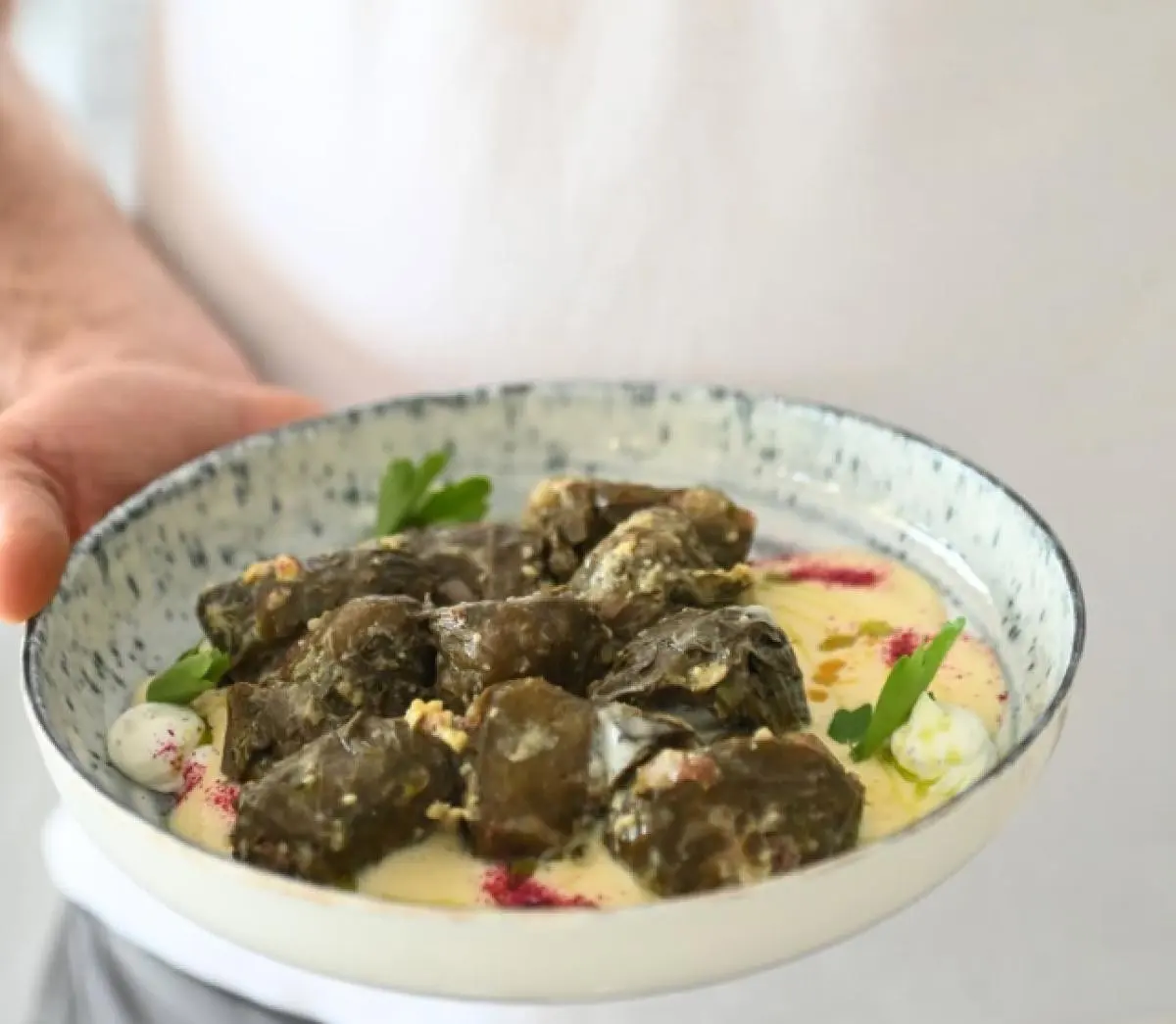
Kalymnos is an island of sponge divers, fishermen and long family tables. Its food is simple, seasonal and built to last through long trips at sea. We have been cooking it at Paradisio since 1995, and Nomiki, who opened the restaurant with Ilias, still makes the traditional dishes herself. This is the guide we give guests who ask us "what should we try here?"
Mermizeli (mirmizeli): the Kalymnian salad
If you only try one local dish, make it mermizeli. You will see it spelled many ways: mermizeli, mirmizeli, mirmintzeli, in Greek μερμιζέλι or μιρμιζέλι. All of them are the same proud island salad.
The base is a round barley rusk (in Greek krithini kouloura), a hard, dried bread that sailors and sponge divers could carry for weeks without it spoiling. The rusk is softened with a little water and topped with ripe tomato, cucumber, capers, olives, a tangy local cheese, island herbs such as oregano, and plenty of olive oil. Some families add onion, others a few salted fish. Every house has its own version; ours is Nomiki's.
Fylla: Kalymnian stuffed vine leaves
Everywhere else in Greece they are called dolmades. On Kalymnos they are fylla (φύλλα), which simply means "leaves". Young vine leaves are rolled by hand around a filling of rice and fresh herbs; many Kalymnian families also add minced meat and a touch of tomato. They are small, tight and full of flavour.
Fylla are one of the dishes our guests order most, and they are always on our menu. If you need them meat free, just ask us how they are made that day.
Mououri: the celebration dish
Mououri (μουούρι) is the dish Kalymnians cook for the biggest days of the year, especially Easter and family celebrations. A lamb or goat is stuffed with rice, herbs and finely chopped offal, then cooked very slowly in a deep clay pot. The pot itself is called a mououri, and that is where the dish gets its name. The result is meat that falls apart and rice that has absorbed all of its juices.
Because it takes so long to prepare, mououri is not on any everyday menu. At Paradisio we cook it on special occasions. If you are planning a family gathering or a big table, ask us in advance whether we can prepare it for you.
Chtapodokeftedes: octopus fritters (not meatballs)
On many English menus in the Dodecanese you will see "octopus meatballs". The Greek name is chtapodokeftedes (χταποδοκεφτέδες), and keftedes means meatballs, but there is no meat in them at all. They are made from octopus that is chopped very finely, traditionally passed through a mincer, then mixed with thyme and local herbs; some recipes also add parsley. The mixture is shaped into small rounds and fried until golden outside and soft inside.
They are a perfect meze to share with a glass of ouzo or a cold white wine, and one of the traditional dishes we serve at Paradisio every day.
Oven-baked chickpeas
Another island classic is chickpeas baked slowly in the oven, usually in a clay pot with onion and olive oil, until they are soft and creamy. It is humble, filling and naturally vegan. At Paradisio you will find it at certain times of the season, so ask what Nomiki has made that week.
Fresh fish from local boats
On an island like Kalymnos the most traditional dish of all is simply the fish of the day, grilled with olive oil and lemon. Ours comes from our own local fishermen, so the menu changes with the sea. Depending on the day you may find:
| Fish | Greek name | What it is like |
|---|---|---|
| Grouper | Rofos (ροφός) | Firm, white and meaty, excellent grilled or baked |
| Red mullet | Barbouni (μπαρμπούνι) | Small and full of flavour, usually fried or grilled whole |
| Red porgy | Fagri (φαγκρί) | Sweet, delicate white fish, a Greek favourite for grilling |
| Gilthead sea bream | Tsipoura (τσιπούρα) | Mild and juicy, perfect for first-timers |
One of our most loved plates is the tuna fillet. And because fish in Greece is usually sold by weight, it is completely normal to ask to see the fish before you order and how much it weighs.
Other Kalymnian foods you may meet
Travel around the island and you may also come across octopus in many other forms, from stews to pies, krabena (cabbage leaves stuffed with rice and herbs) and iristes, the local version of loukoumades, the Greek honey doughnuts. If you see any of them, try them.
Not only seafood: meat on Kalymnos
Visitors expect fish, but Kalymnians love their meat. Locals often come to Paradisio for pork and prime cuts such as tomahawk, picanha and ribeye, grilled and shared. If your group is split between fish lovers and meat lovers, you will both be happy.
What to drink
Our wine list is made only of Greek grape varieties, from some of the best wineries in the country. With mermizeli, fylla and grilled fish, a crisp Greek white is the classic choice; with meat or mououri, go for a Greek red. Ask us for a recommendation: we love talking about Greek wine. And in the morning, try our coffee. It has been one of our passions for many years.
We are also a beach bar, and our bar serves cocktails and spirits all day: a good way to end a long lunch, or to start the evening as the bay changes colour.
Dessert
After a long lunch, keep it light: halva mousse, chocolate cream or one of our ice creams.
A Kalymnian meal, the way locals order it
- Bread (ours is baked in house) and a mermizeli for the table.
- A plate of fylla, octopus fritters and one or two other meze to share.
- Fish of the day, chosen together with the waiter, or a tuna fillet.
- A bottle of Greek white wine.
- Something sweet, and a coffee to finish.
Frequently asked questions
What is mermizeli?
Mermizeli (also spelled mirmizeli or mirmintzeli) is the traditional salad of Kalymnos: a softened barley rusk topped with tomato, cucumber, capers, olives, a tangy local cheese, herbs and olive oil. You can try it at Paradisio in Vlychadia, where it is always on the menu.
What are fylla in Kalymnos?
Fylla is the Kalymnian name for stuffed vine leaves (dolmades): small vine leaves rolled by hand around rice and herbs, often with minced meat. At Paradisio they are made with Nomiki's traditional recipe.
What is mououri and where can I try it?
Mououri is a Kalymnian celebration dish of lamb or goat stuffed with rice, herbs and offal, slow-cooked in a clay pot also called a mououri. It is mostly made for Easter and family celebrations. Paradisio prepares it on special occasions, so ask in advance.
What are octopus meatballs (chtapodokeftedes)?
Despite the name, they contain no meat. Chtapodokeftedes are octopus fritters: very finely minced octopus mixed with thyme and local herbs, sometimes parsley, shaped into small rounds and fried. They are a traditional meze in Kalymnos and the Dodecanese, served every day at Paradisio in Vlychadia.
What is the most typical food in Kalymnos?
Fresh fish from local boats, mermizeli salad and fylla (stuffed vine leaves) are the dishes most visitors associate with the island, with mououri as the great celebration dish.
Is Kalymnian food good for vegetarians?
Yes. Mermizeli and oven-baked chickpeas are vegetarian (the chickpeas are vegan), and most tavernas, including Paradisio, have more vegetarian and vegan options. Ask whether the fylla of the day contain meat.