Things to Do in Kalymnos: A Local Family's Guide to the Island
We have run a taverna on Kalymnos since 1995, and the question we hear most at our tables, after "what is the fish today?", is "what else should we do on the island?" Kalymnos is not a party island and not a postcard of white houses. It is a working island of sponge divers, fishermen and climbers, with dramatic mountains dropping into very clear water. Here is what we tell our guests.
1. Pothia: the harbour town of the sponge divers
Pothia, the capital and main port, is where most visitors arrive. Its colourful houses climb the hillsides around a busy harbour, and it is the best place to understand what made Kalymnos famous: sponge diving. For generations Kalymnian men sailed to the coasts of North Africa for months at a time, diving for natural sponges, first holding their breath and later in heavy diving suits that cost many lives.
- Nautical Museum: on the harbour front, in a fine neoclassical building, with exhibits on the island's maritime and sponge diving history.
- Archaeological Museum: in town, home to the bronze "Lady of Kalymnos", a Hellenistic statue that a local fisherman brought up from the sea in 1995, the same year we opened.
- A sponge workshop: a few sponge businesses still work in Pothia and show visitors how natural sponges are cleaned, trimmed and sorted. A Kalymnos sponge is the most authentic souvenir you can take home.
- Church of Christ the Saviour: the big church on the waterfront, known for a marble iconostasis by the sculptor Giannoulis Halepas.
- Monastery of Agios Savvas: high above the town with its large cross, a place of pilgrimage for thousands of visitors a year and one of the best viewpoints over Pothia and the harbour. Dress modestly.
- The Kalymnian House: a private folk museum in a restored traditional house, about 1.5 km from Pothia towards Vothyni, showing how a Kalymnian family lived around 1900.
2. Chora and the castle of Pera Kastro
A few minutes above Pothia is Chora (also called Chorio), the old capital, which today has almost merged with Pothia. Above it, on a rocky hill, stands Pera Kastro, the Byzantine era castle where islanders once lived to stay safe from pirates. Inside the walls you can still see ruins of houses and small chapels with painted walls. Go up in the late afternoon: the view over Pothia, the harbour and the sea is one of the best on the island.
3. An ancient sanctuary: Christ of Jerusalem
Near Chora, the church of Christ of Jerusalem was built over the ruins of the ancient sanctuary of Apollo, once the most important temple on the island. Look closely and you will see ancient stones and inscriptions built into the Christian walls.
4. A slow day in Vlychadia
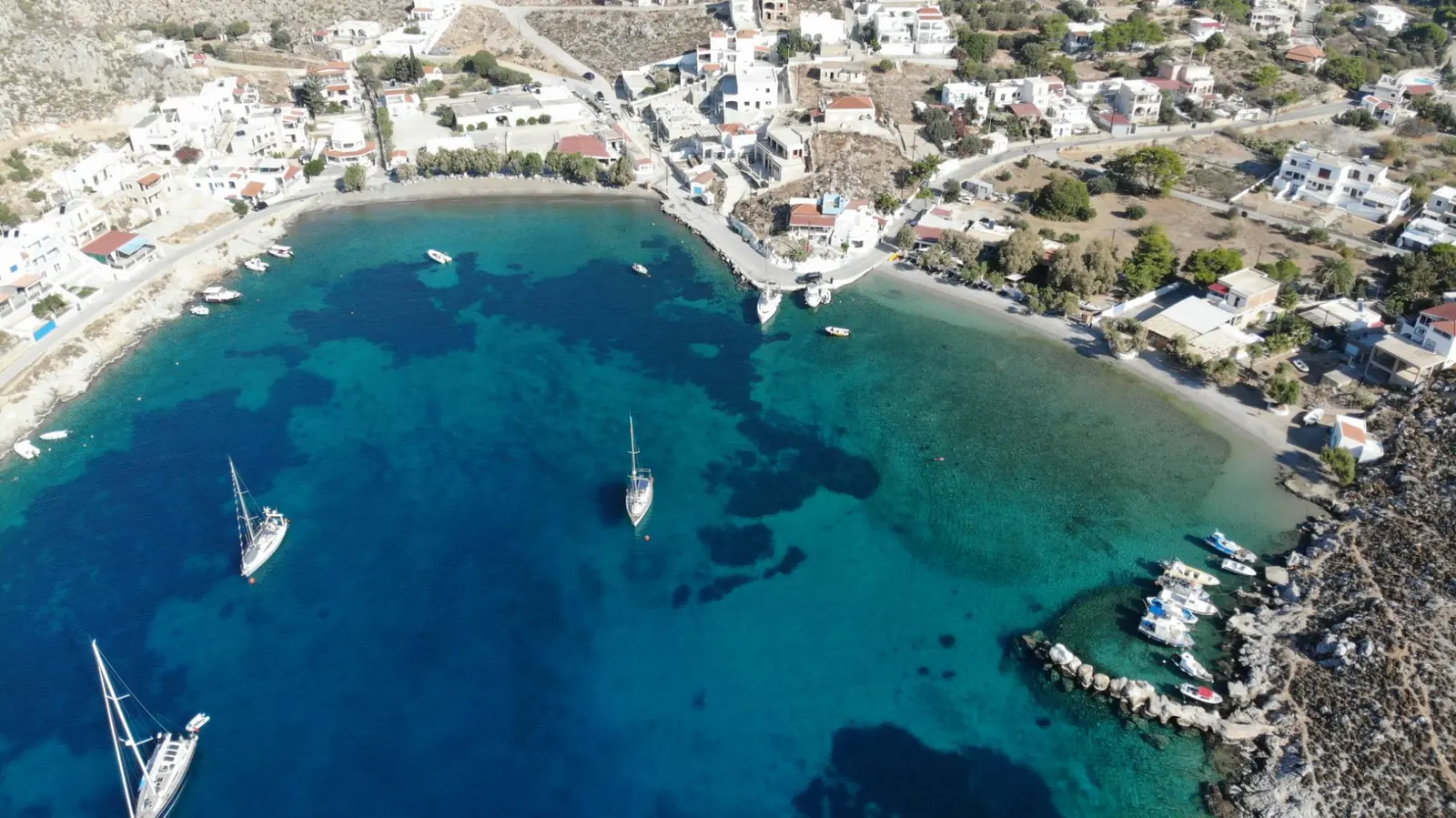
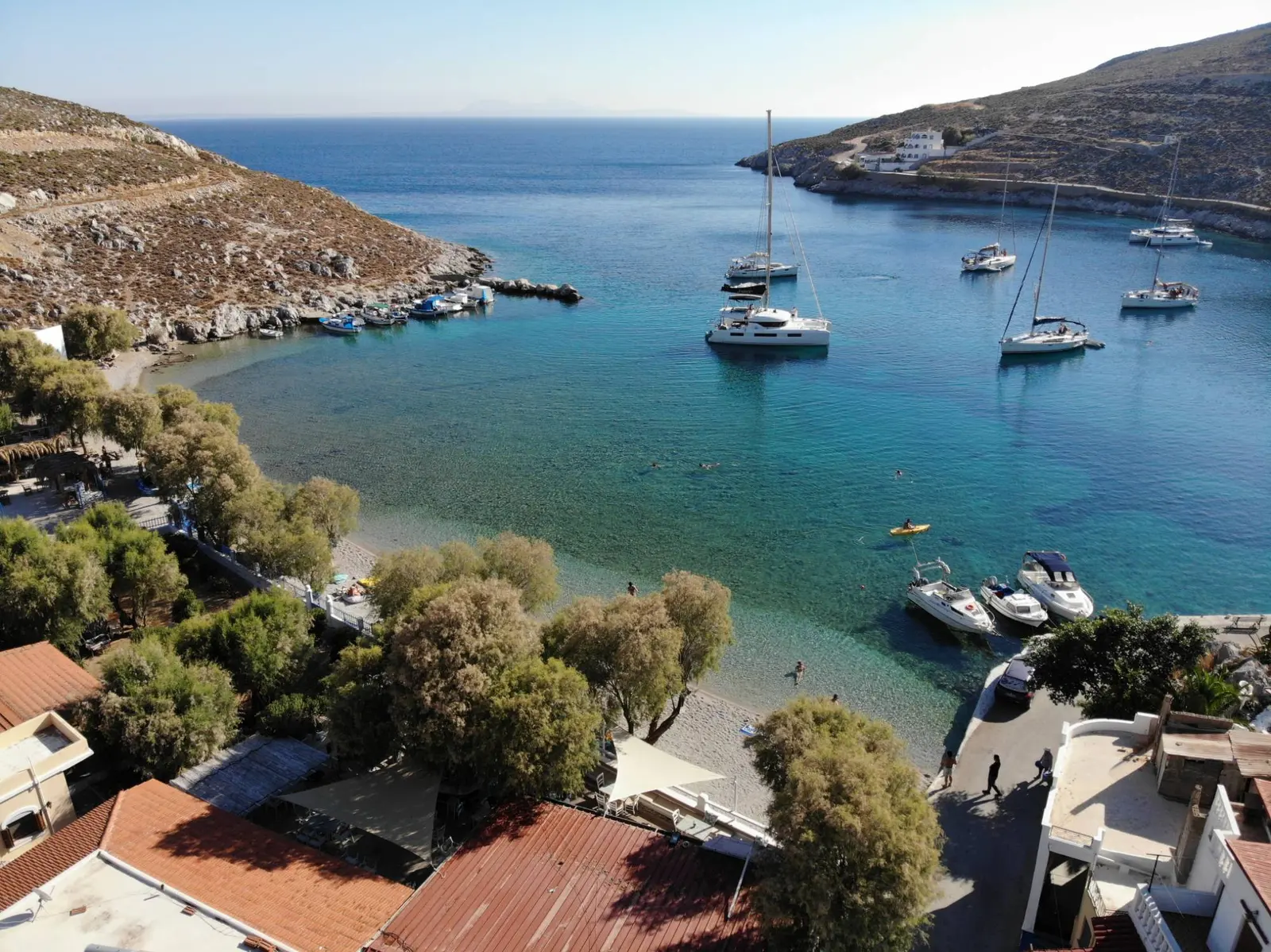
On the south coast, about 6 km from Pothia, the small bay of Vlychadia is where we live and work, so we are biased. It has shallow, clear water that is perfect for children, canoeing and water sports, rocks for cliff jumping at the spot locals call Vala, good snorkelling and diving, and it stays sheltered when the north wind blows. On the way from Pothia you pass the Kalymnian House, a folk museum in a traditional house, and the road up to the monastery of Agios Savvas. Read our full guide to Vlychadia.
5. Telendos, the island across the water
Opposite Myrties and Massouri on the west coast rises Telendos, a small island that, according to local tradition, was once joined to Kalymnos. A taxi boat from Myrties takes only a few minutes. There are no cars, just one small village with a few tavernas, quiet beaches and walking paths. It makes an easy, relaxing half day.
6. The west coast: Myrties and Massouri
The west coast is the lively side of the island, with hotels, cafés, bars and climbers' hangouts. Massouri has the most visited sandy beach, and from Myrties and Massouri you watch the sun go down behind Telendos, one of the classic evening views of the Dodecanese.
7. Vathy and Rina: the green fjord
Drive northeast from Pothia, about 11 km, and the landscape changes completely. Vathy is the island's largest and most fertile valley, full of citrus orchards, ending in a long, narrow inlet at Rina that many people compare to a fjord. At the mouth of the inlet is the Daskalio cave, a prehistoric site. Have a coffee by the little harbour and swim off the rocks.
8. Sea caves and boat trips
Kalymnos is made of limestone, and its coast is full of caves. The best known is Kefalas Cave, with large chambers of stalactites and stalagmites; in season, boat trips go there from Pothia. Closer to town, the Cave of the Seven Virgins is linked to a local legend about seven girls who hid there from pirates. Ask at the harbour in Pothia which boat trips are running when you visit.
9. Beaches: which one when?
Kalymnos is not an island of long sandy beaches. It is an island of coves, many of them pebbly, with exceptionally clear water. Our quick guide:
| Beach | Why go |
|---|---|
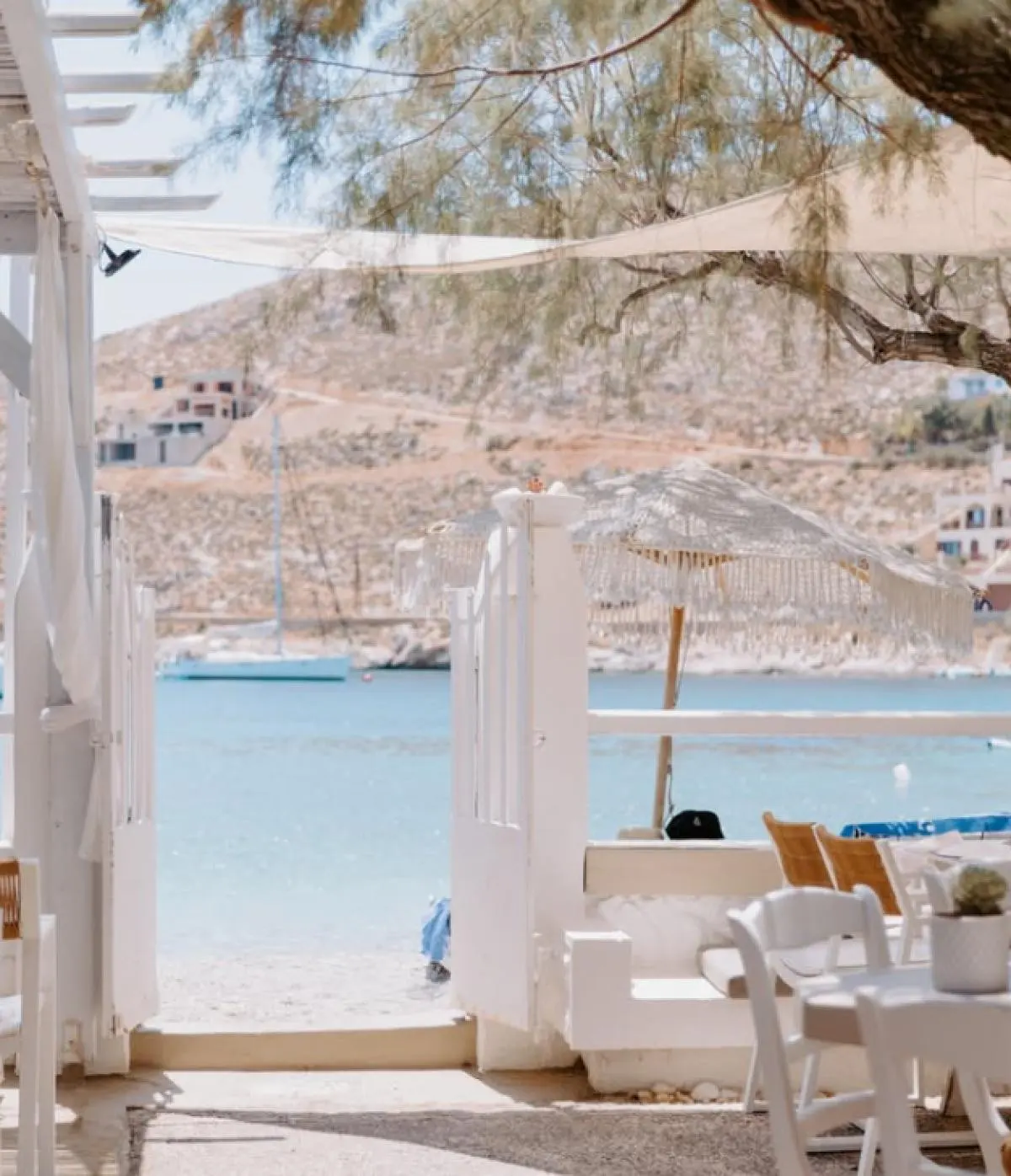
| Vlychadia (south) | Shallow, calm water for children; sheltered from the north wind; snorkelling; a long lunch at Paradisio |
| Kantouni (west) | Easy to reach from Pothia, organised, lively |
| Platys Gialos (west) | Dark sand, very clear water, sunset views |
| Massouri (west) | The best known sandy beach, organised, views of Telendos |
| Arginonta (northwest) | Organised beach with tavernas nearby |
| Emporios (north) | Quiet, remote village at the end of the road |
| Palionisos (east) | Peaceful pebble bay with tamarisk trees, reached by a rough road |
| Akti (east) | Calm small beach, you need a car or scooter |
10. Rock climbing
Kalymnos is one of the most famous sport climbing destinations in the world, with thousands of bolted routes on the limestone cliffs above the west coast and a well known climbing festival. Climbers come mostly in spring and autumn, when the temperatures are kinder. Many of our guests in May, September and October are climbers from Austria, Italy, France and Switzerland enjoying a rest day by the sea.
11. Diving and snorkelling
With sponge diving in its blood, Kalymnos is a natural place to explore underwater. There is a dive centre in the Vlychadia area that runs courses for all levels, and the clear water around the island is excellent for simple snorkelling straight from the beach.
12. A day trip to Pserimos
The small island of Pserimos, between Kalymnos and Kos, has a lovely sandy bay and a handful of tavernas. In season a local boat usually leaves Pothia in the morning and returns in the late afternoon. Timetables change, so check at the harbour.
13. Easter in Kalymnos
If you visit at Greek Orthodox Easter, prepare for something unique and very loud. Kalymnos is famous across Greece for celebrating Easter with dynamite thrown from the hills around Pothia, a tradition that many locals love and others criticise. It is also the time of year when families cook mououri, the island's celebration dish of stuffed lamb or goat slow cooked in a clay pot.
14. Walk up to the highest point
For a serious walk, the summit of Profitis Ilias, the island's highest mountain at around 670 m, is crowned by a small church, with views across the Dodecanese on a clear day. Start early, carry water and wear proper shoes: the paths are rocky and there is little shade.
15. Eat like a Kalymnian
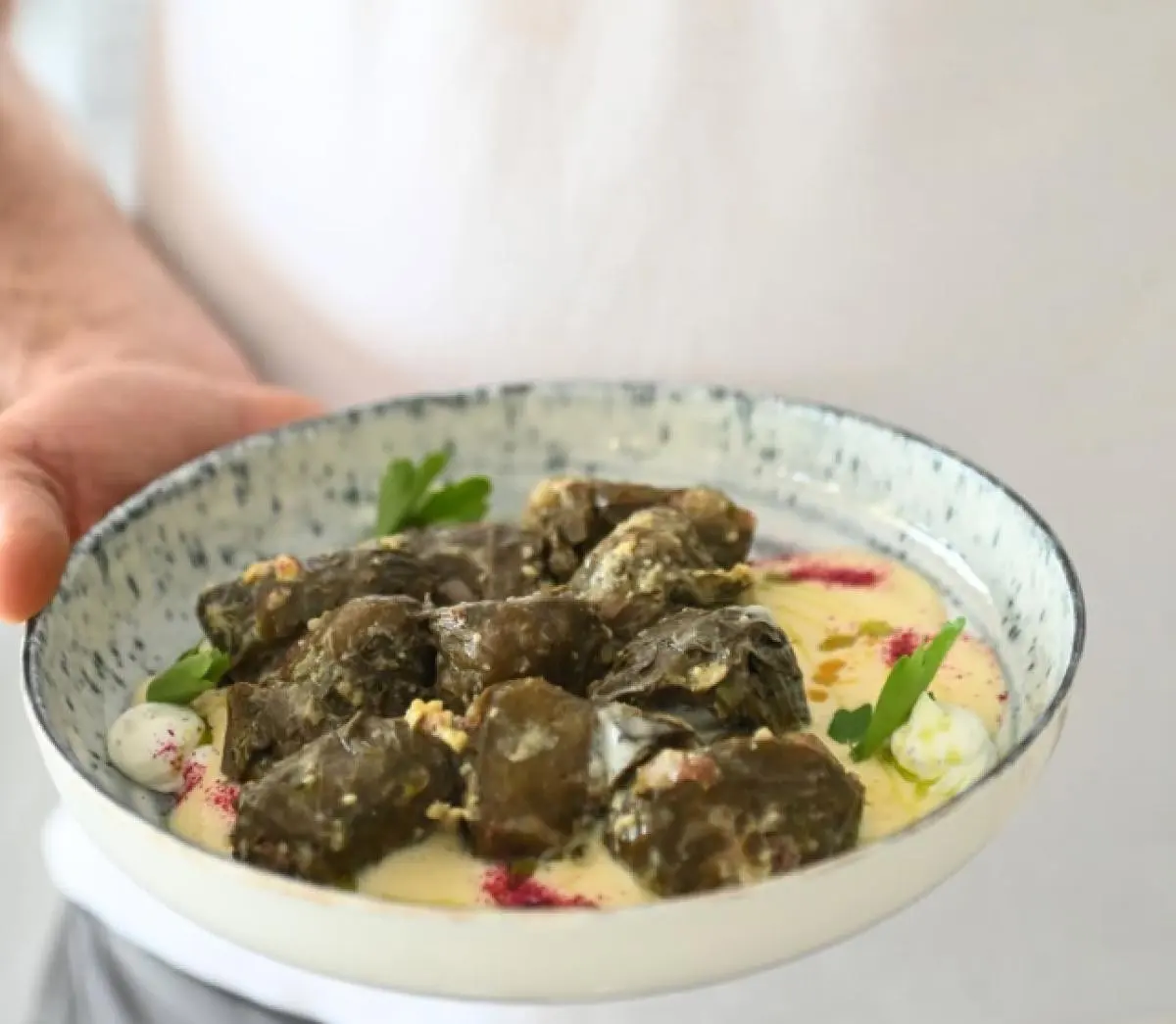
Do not leave without trying mermizeli, the island salad on a barley rusk, fylla, the Kalymnian stuffed vine leaves, and fish straight from local boats. Our Kalymnos food guide explains what to order, and where in Vlychadia to eat by the water.
Getting around Kalymnos
- Car or scooter: the easiest way to see the island; distances are short, but roads are winding.
- Buses: link Pothia with the main villages, but some places, like Vlychadia, have only one or two buses a day.
- Taxis: available in Pothia; for example, about €12 from Pothia to Vlychadia.
- Taxi boats: from Myrties to Telendos, and seasonal boat trips from Pothia.
When to visit
The season runs roughly from May to October. July and August are the hottest and busiest months. For walking, climbing and quieter beaches, we love May, June, September and October: the sea is warm by June and stays warm well into autumn. Paradisio is open from May until early November.
Frequently asked questions
What is Kalymnos famous for?
Kalymnos is famous for its sponge diving history, for world class rock climbing on its limestone cliffs, for its Easter dynamite tradition and for very clear water and fresh fish.
How many days do you need in Kalymnos?
Three to four days let you see Pothia and Chora, visit Telendos and Vathy and enjoy a few beaches. Climbers and slow travellers often stay a week or two.
What is the best beach in Kalymnos?
It depends on what you want. Massouri is the best known sandy beach, Platys Gialos is lovely for sunset, and Vlychadia is best for families and for windy days because the water is shallow and the bay is sheltered from the north wind.
Is Kalymnos worth visiting?
Yes, especially if you like authentic islands, the sea, food and the outdoors. It is less touristy than many Greek islands, with a strong local character, great swimming and famous climbing.
How do you get to Telendos from Kalymnos?
Small taxi boats leave from Myrties on the west coast of Kalymnos, and the crossing takes only a few minutes.
When is the best time to visit Kalymnos?
From May to October. May, June, September and October are quieter and ideal for walking and climbing, while July and August are the hottest and busiest months.